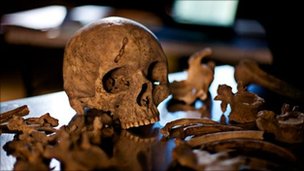
Oldest evidence of mammals feeding on dinosaurs found on Mamenchisaurus fossil
German scientists have described the oldest known evidence of mammals "feeding" on dinosaurs, based on tooth marks found on a neck rib of the dinosaur Mamenchisaurus.
In 2000, a joint Chinese-German expedition excavated a large number of vertebrate fossils, including turtles, crocodiles, dinosaurs and mammals, along the southern margin of the Junggar Basin in China, dating to about 160 million years ago, in the Late Jurassic.
Twenty years later, working on this batch of fossils, German scientists described the oldest known evidence of mammals "feeding" on dinosaurs, based on tooth marks on a neck rib of the dinosaur Mamenchisaurus.
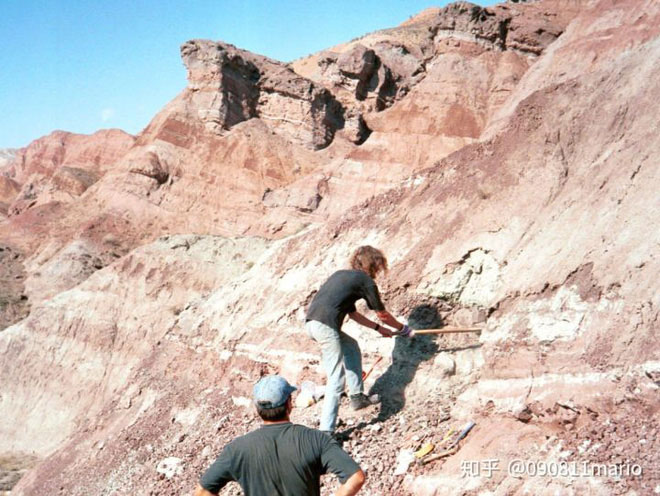
The excavation site in the Junggar Basin.
Among the Late Jurassic fossils excavated in the Junggar Basin was a fragmented cervical (neck) rib that the scientists think may belong to a Mamenchisaurus more than 20 meters long. At first, the researchers noticed nothing unusual about these neck rib fossils; only when they re-examined them did they spot small, elongated marks on the bone, about 0.5-1.5 mm long and about 30–250μm wide.
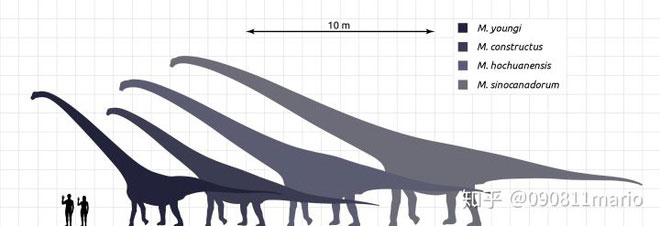
Mamenchisaurus is a genus of sauropod dinosaurs notable for its long neck, which made up more than half of its body length. Most species in the genus lived between 160 and 145 million years ago, from the Oxfordian to the Tithonian stages of the Late Jurassic. The largest species reached 35 m in length and may have weighed 50 to 75 tonnes. The long neck is the distinctive hallmark of Mamenchisaurus, measuring between half and two-thirds of its body length. The neck of Mamenchisaurus was made up of 19 cervical vertebrae, the longest of which measured more than 2 meters. The vertebrae were rigidly connected, so its neck was not flexible and moved slowly and with difficulty. Scientists speculate that this dinosaur's neck muscles were relatively well developed; otherwise, it could not have supported such a long neck.
After finding these small, thin marks on the bone, the researchers considered three main possible causes: first, sediment abrasion or trampling by vertebrates; second, insect activity; and finally, vertebrate tooth marks. To find the answer, they compared the marks on the fossil neck rib with a large number of other fossil specimens bearing similar traces.
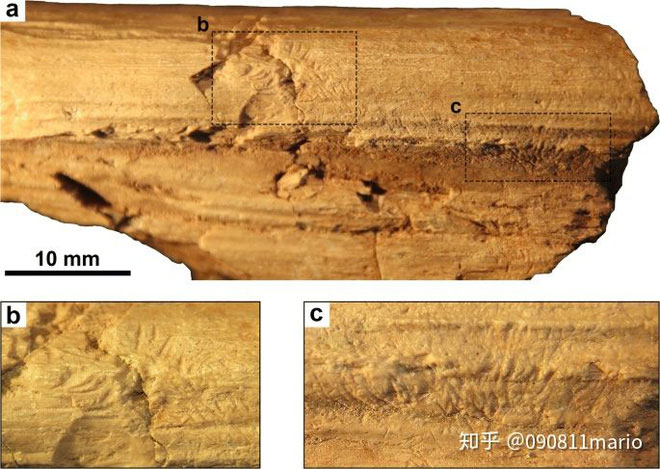
Fossil neck rib of Mamenchisaurus with biological traces; a, b and c are photos taken from different angles.
Sediment abrasion and trampling by vertebrates leave fine scratches on the bone surface, usually appearing as clusters of parallel striations. They are typically less than a few hundred µm (micrometers) long and only a few micrometers wide.
But the marks on the neck rib fossil are not arranged in clusters of parallel striations, so they cannot be trampling marks left by animals. As mentioned above, the marks on the fossil are about 0.5-1.5 mm long and about 30–250μm wide (1 mm = 1000 μm), much larger than those produced by sediment abrasion.
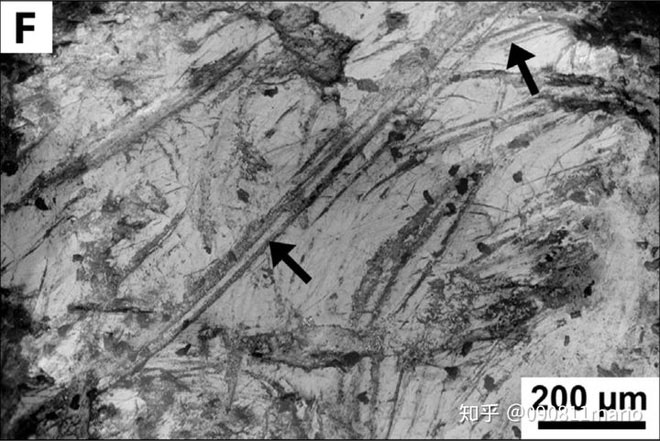
The marks on the fossil are about 0.5-1.5 mm long and about 30–250μm wide.
The second possibility is that the marks were made by insects, a fairly common cause in the fossil record that leaves a wide variety of traces. Insect traces mostly take the form of holes and long grooves. The main culprits behind this phenomenon are termites.
In the past, many biological traces on dinosaur bones have been suspected of being linked to ancient termite nests. Termite marks are characterized by having their deepest part in the middle, with both ends pointed and the middle wide; in addition, the small bite marks often have ridges.
However, the traces on the fossil neck rib are teardrop-shaped, pointed at one end and blunt at the other, with the deepest part close to the blunt end. Therefore, these marks cannot have been made by insects.
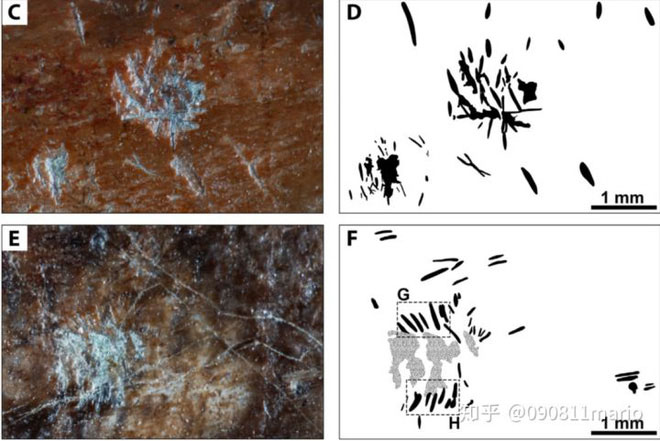
Traces left on fossils by insect activity.
After ruling out these possibilities and carrying out detailed analyses, the researchers finally narrowed the culprit down to mammals, based on the size of the marks on the fossil as well as the size, shape and type of the teeth.
After comparing the teeth of ancient mammals from the region, the scientists believe the larger tooth marks on the Mamenchisaurus neck rib were most likely made by Sineleutherus from China, because the width of its incisor tip, 200μm, matches the 30-250μm width of the tooth marks on the fossil neck rib.
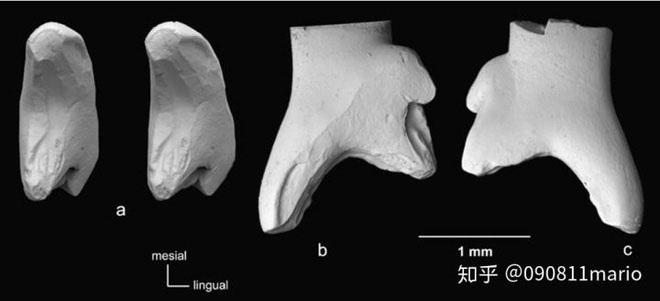
Incisor of Sineleutherus from China; the tooth tip is 200μm wide.
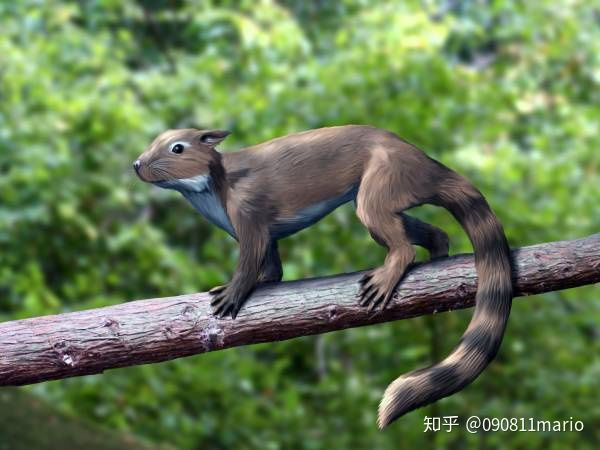
Sineleutherus looked like a squirrel or a house mouse.
Sineleutherus lived in the Middle to Late Jurassic and looked like a squirrel or a house mouse. To this day, the animal remains the subject of much debate: some think it was a mammal, while others consider it merely a side branch.
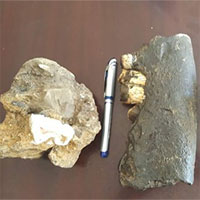
Rhinoceros sinensis fossils found near Rục community in Vietnam
Two Rục men found three Rhinoceros sinensis fossils, 30,000 to 50,000 years old, in a cave in Phong Nha-Kẻ Bàng National Park, Vietnam.
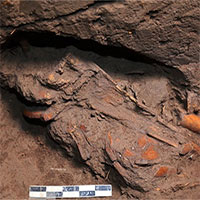
Prehistoric human remains unearthed in Southeast Asia's largest volcanic cave system
Archaeologists have uncovered dozens of ancient human remains in Vietnam's Chư Bluk volcanic caves, the largest volcanic cave system in Southeast Asia.
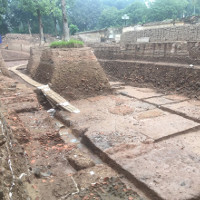
Traces of Early Lê dynasty palace unearthed at Hanoi's Imperial Citadel of Thăng Long
A 2017 dig east of Kính Thiên Palace in Hanoi revealed 4.5m of cultural layers and glazed roof tiles from Early Lê dynasty palaces.
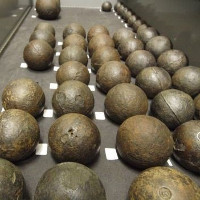
X-rays help scientists save cannonballs from the Mary Rose
Researchers are using powerful X-rays to find a way to preserve cannonballs from the Mary Rose, which corrode when put on display.
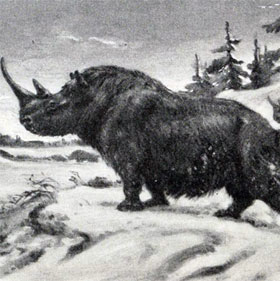
Rhino fossil more than 100,000 years old found in Russia
Russian scientists have unearthed a fossil of the ancient Merck's rhinoceros, which lived about 120,000 years ago in the Ural Mountains.
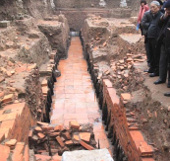
Giant ancient water channel unearthed beneath Vietnam's Imperial Citadel of Thăng Long
Near the Đoan Môn Gate, archaeologists unearthed layered Lý, Trần, Lê and Nguyễn remains, including a giant brick water channel.