Traces of Early Lê dynasty palace unearthed at Hanoi's Imperial Citadel of Thăng Long
On the morning of April 17, 2018, the Thăng Long - Hà Nội Heritage Conservation Center and the Vietnam Institute of Archaeology held a scientific workshop to present preliminary results of the 2017 exploratory excavation of the main Kính Thiên Palace area at 9 Hoàng Diệu Street in Hanoi.
Traces of a thousand-year-old palace underground
In 2017, the two institutions carried out an exploratory excavation of the area east of the Kính Thiên Palace foundation (next to Nguyễn Tri Phương Street) in the Imperial Citadel of Thăng Long, covering a total area of nearly 1,000m2.
The excavation pit comprised 16 dig layers, each about 20cm thick on average. The stratigraphy is quite complex, because over the course of history later periods cut into and disturbed the cultural layers of earlier ones.
According to Associate Professor Tống Trung Tín, president of the Vietnam Archaeological Association, the excavation exposed a cultural deposit nearly 4.5m thick, with layers dating from the Đại La period through the Đinh, Former Lê (Tiền Lê), Lý, Trần, Early Lê (Lê sơ), Revival Lê (Lê Trung hưng) and Nguyễn dynasties up to modern times. It uncovered three architectural remains from the Lý–Trần period, along with several architectural remains from the Early Lê, Revival Lê and Nguyễn periods. The main types of remains and materials found include column foundations, wall foundations, building platforms and platform edging…
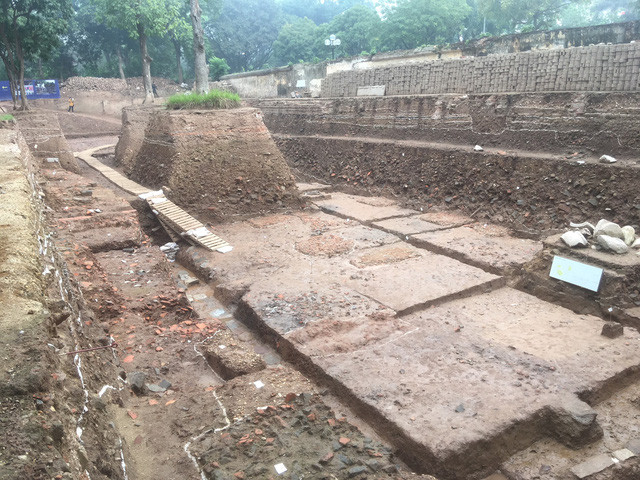
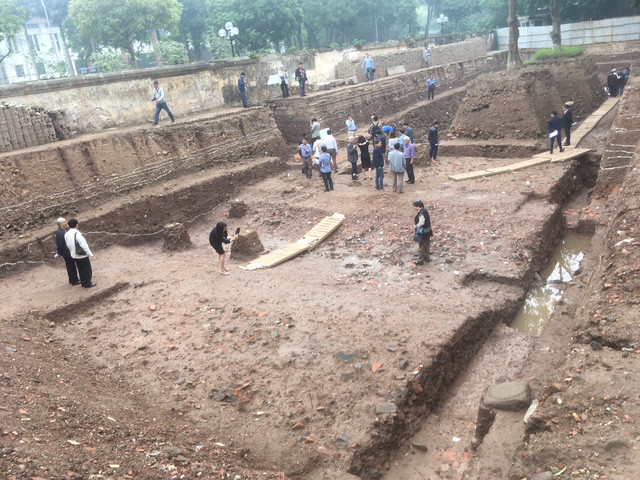
An overview of the excavation pit east of Kính Thiên Palace in the Imperial Citadel of Thăng Long. (Photo: Tùng Long).
Artifacts recovered from these cultural layers are of many types, including terracotta, ceramics, wooden objects and metal objects, with roof tiles and bricks making up a large share. The most remarkable finds are tiles and decorative roofing materials for palaces with yellow glaze (hoàng lưu ly) and green glaze (thanh lưu ly) from the Early Lê period (15th to early 16th century).
Tống Trung Tín said these artifacts give a clearer picture of the "dragon tiles," dragon heads at the eaves and dragon tails at the roof corners… that covered the palaces in the main Kính Thiên Palace area of the Early Lê emperors. Another notable discovery was a fairly large quantity of ceramics from the Mạc dynasty (around the 16th century). The Mạc-period remains and artifacts indicate that the Mạc dynasty took over the Early Lê buildings largely intact, making only minor repairs.
Notably, the Trần-period architectural remains include a very large "hoa chanh" (lemon-flower pattern) foundation strip, of which a 1.15m section survives. It was built from flat tiles laid with great care. These features suggest it belongs to an early Trần structure (13th century) that occupied an important position in the Trần-dynasty imperial palace of Thăng Long. It is also the largest of nearly all the hoa chanh foundation strips found elsewhere in the Thăng Long capital and at other Trần-era sites of Đại Việt (apart from the vaulted Trần-period hoa chanh structure at 18 Hoàng Diệu).
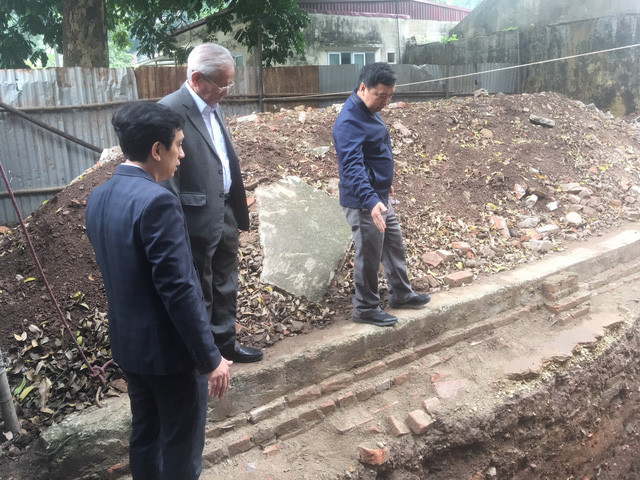
Associate Professor Tống Trung Tín, Professor Phan Huy Lê and the director of the Imperial Citadel of Thăng Long Heritage Center visit the excavation pit. (Photo: Tùng Long).
The Revival Lê architecture revealed a very solid wall foundation built of "gạch vồ" bricks. Some experts believe it marks the foundation of a gate within the Forbidden City of Thăng Long during the Revival Lê period. This cultural layer also contains traces of stone and brick foundations thought to belong to a pond or lake inside the imperial palace. Its nature and date are still under investigation.
Enough archaeological evidence to reconstruct the Kính Thiên Palace space
Professor Nguyễn Quang Ngọc, vice president of the Vietnam Association of Historical Sciences, said the newly revealed architectural remains and artifacts are very new compared with previous finds. Such novelty may puzzle researchers, but it is very valuable. The discoveries further reflect the complex evolution of Kính Thiên Palace's architecture across historical dynasties. This makes it essential to have an overall map linking all excavation sites to date, so that the whole picture can be seen and the central axis of Kính Thiên Palace can be identified.
Many scientists also proposed further study of the pool recently found in the excavation pit to understand how it connects with the Đại La, Lý, Trần… periods. In particular, the Mạc dynasty element needs to be clarified through the cultural layers and the artifacts found during the excavation. More importantly, they said, a plan for expanded excavation should be drawn up and the work accelerated to restore the space of Kính Thiên Palace.
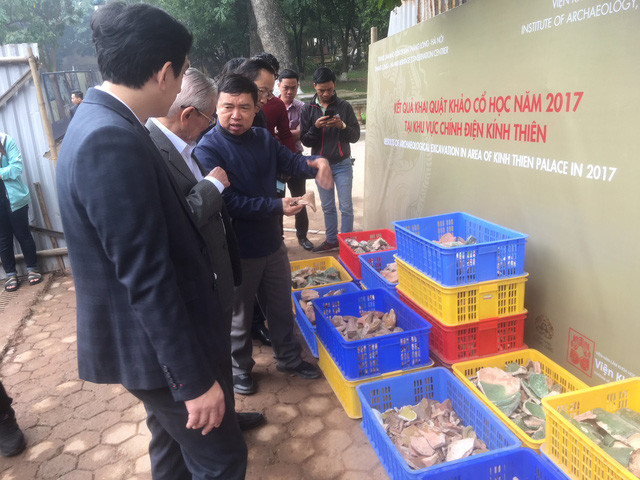
Associate Professor Tống Trung Tín presents artifacts found in the excavation pit. (Photo: Tùng Long).
Professor Phan Huy Lê, president of the Vietnam Association of Historical Sciences, said the excavation east of the Kính Thiên Palace foundation had produced very new results, raising many new questions for researchers.
"I find that this excavation pit is the deepest so far, and it has architectural remains running continuously from the Đại La period all the way to the Nguyễn. Although the Đại La remains in this pit are quite small, they partly show that the extent of Đại La stretched from Đoan Môn Gate to Kính Thiên. For the Lý, Trần and Lê periods we also found architectural remains, especially the 1.15m Trần-period hoa chanh foundation strip. So we can surmise that a very large structure once stood here.
In particular, the Lê-period architectural materials found this time are extremely rich. They are on the scale of Early Lê palace roofs. There is enough material to pursue research in that direction," Professor Phan Huy Lê stressed.
Phan Huy Lê also said that, based on the scientists' contributions, researchers and archaeologists should focus on three issues. First, the archaeological excavation plan approved by the Hanoi People's Committee allows 1,000m2 to be excavated each year. This figure is reasonable; there is no need to expand the area or speed up the work too much. What matters is that the excavation follows a concrete, scientific plan.
"I propose that in the coming period we concentrate on excavating the whole stretch from Đoan Môn Gate to Kính Thiên Palace, and behind Kính Thiên Palace within certain limits. One way or another, we will have enough archaeological evidence to reconstruct the space of Kính Thiên Palace. I stress that we are reconstructing the space of Kính Thiên Palace; actually rebuilding the palace itself would be very difficult. Reconstructing the roof and some structures, however, is feasible," Professor Lê said.
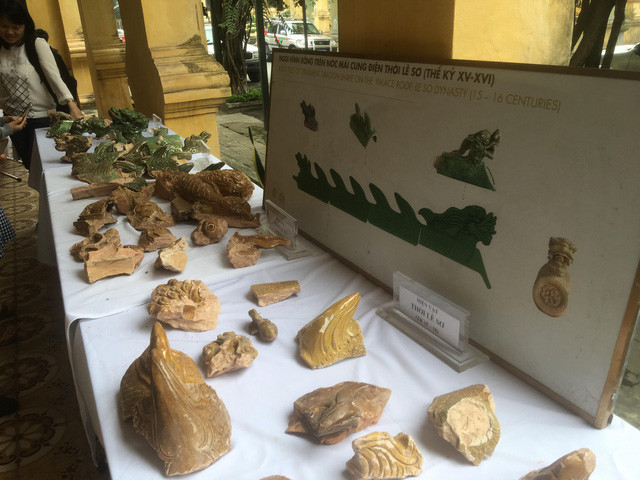
Some Early Lê artifacts found beneath Kính Thiên Palace. (Photo: Tùng Long).
According to Phan Huy Lê, excavation must go hand in hand with research rather than being excavation for its own sake. It is time to link the excavation sites to understand how the architecture looked in each period. On that basis, a scientific conference should be held to discuss all the issues raised. Moreover, these excavations are for conservation, not for clearing land. Therefore, each excavation must be followed by a specific conservation plan. What can be preserved in the short term should be opened to visitors soon; what requires long-term conservation must also be planned. In addition, everything must be documented to the highest standard.
X-rays help scientists save cannonballs from the Mary Rose
Researchers are using powerful X-rays to find a way to preserve cannonballs from the Mary Rose, which corrode when put on display.

Rhino fossil more than 100,000 years old found in Russia
Russian scientists have unearthed a fossil of the ancient Merck's rhinoceros, which lived about 120,000 years ago in the Ural Mountains.
Giant ancient water channel unearthed beneath Vietnam's Imperial Citadel of Thăng Long
Near the Đoan Môn Gate, archaeologists unearthed layered Lý, Trần, Lê and Nguyễn remains, including a giant brick water channel.

Ancient Roman sewer uncovered at Herculaneum reveals clues to daily life
An 86-meter sewer and skeletons found at Herculaneum, Italy, shed light on the diet and daily life of Romans 2,000 years ago.