9,000-year-old grave of a young female hunter could rewrite prehistory
An ancient grave found in Peru holds the remains of a young woman just 17 to 19 years old, buried with the gear she carried on her hunting trips.
According to Randy Haas of the University of California, Davis (US), the grave at the Wilamaya Patjxa archaeological site in Peru suggests we should rethink ancient history from the era when humans lived mainly by hunting and gathering. Ancient hunter-gatherer societies have long been assumed to follow a simple pattern: men hunted and butchered game, while women foraged for plants. That assumption may be wrong.
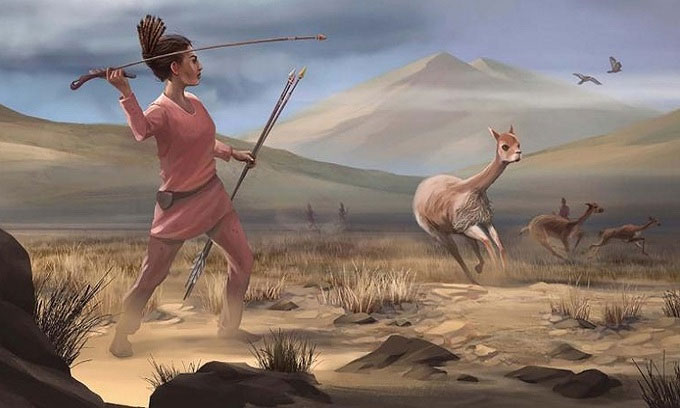
Portrait of the 9,000-year-old young female hunter - (Photo: UNIVERSITY OF CALIFORNIA, DAVIS).
Analysis of the remains indicates that this young woman was a true hunter who crossed the grasslands in search of big game. The grave goods placed beside her point to the same conclusion. Ancient graves typically contain objects that were familiar to the dead in life. In this woman's case, they were stone knives, projectile points and chopping tools designed for hunting and cutting up large animals, tools for processing animal innards, and scrapers for preparing hides…
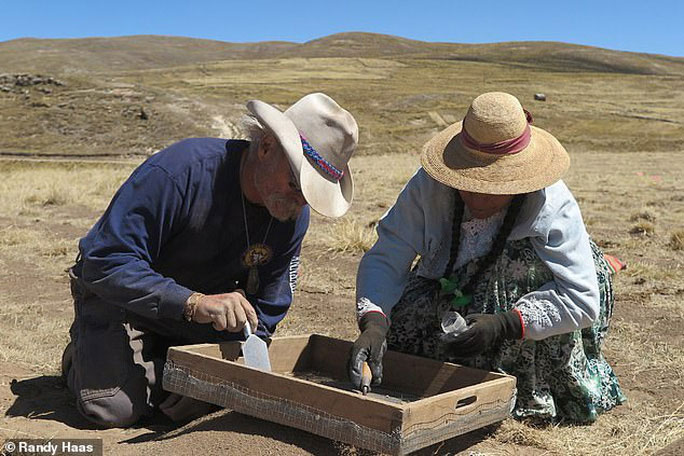
Archaeologists at the site - (Photo: RANDY HAAS).
At first, the archaeologists were unsure of the individual's sex despite the distinctly female bone structure, but dental analysis confirmed that she was indeed a young woman, around 17, or at most 19, years old.
The grave suggests that the gender-based division of labor in this period may be merely a modern theory, or may only have been common in certain regions. A male hunter a few years older was also found nearby, buried in a similar way.
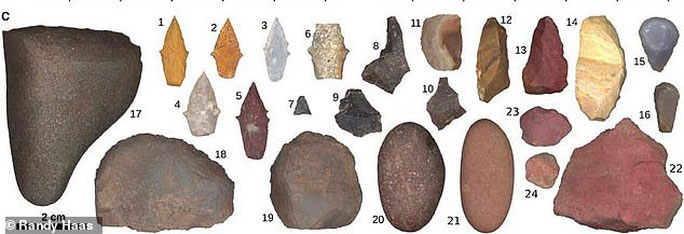
The stone tools found at the site - (Photo: RANDY HAAS).
To test the idea, the researchers re-examined 427 other sets of human remains excavated across North and South America. All of these ancient burials date to the late Pleistocene or early Holocene epochs. The Pleistocene and Holocene are geological time intervals: the Pleistocene lasted from about 2.58 million years ago to about 11,700 years ago, and the Holocene began right after and continues to this day.
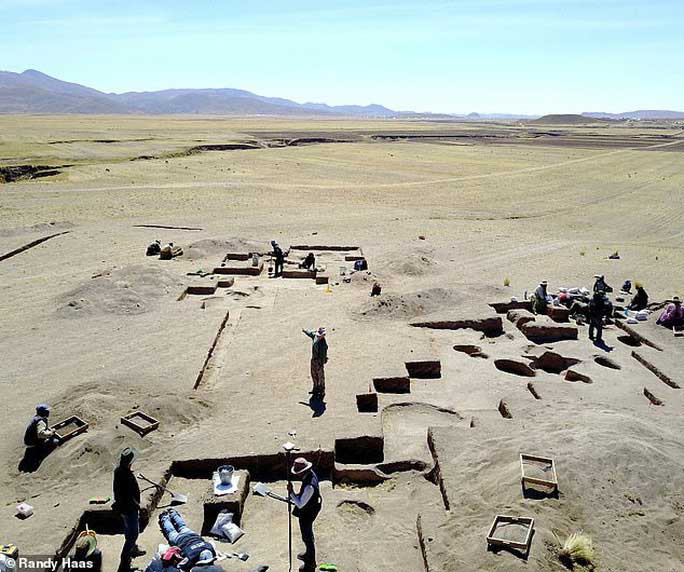
Overview of the excavation area - (Photo: RANDY HAAS).
Of these burials, 27 contained hunting tools among their grave goods. The analysis found that 11 of these individuals were women and 15 were men.
Further analyses suggest that in the pre-agricultural Americas, roughly 30% to 50% of hunters were women. Their main prey were camelids and other large herbivores.
The study was recently published in the journal Science Advances.

Stunning discovery behind secret doors inside Egypt's Great Pyramid
Two secret "doors" inside the Great Pyramid of Giza may conceal a hidden chamber of the pharaoh Khufu, but their true purpose remains a mystery.

Oldest evidence of mammals feeding on dinosaurs found on Mamenchisaurus fossil
Tooth marks on a 160-million-year-old Mamenchisaurus neck rib from China are the oldest known evidence of mammals feeding on dinosaurs.
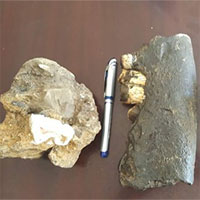
Rhinoceros sinensis fossils found near Rục community in Vietnam
Two Rục men found three Rhinoceros sinensis fossils, 30,000 to 50,000 years old, in a cave in Phong Nha-Kẻ Bàng National Park, Vietnam.
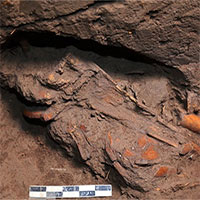
Prehistoric human remains unearthed in Southeast Asia's largest volcanic cave system
Archaeologists have uncovered dozens of ancient human remains in Vietnam's Chư Bluk volcanic caves, the largest volcanic cave system in Southeast Asia.
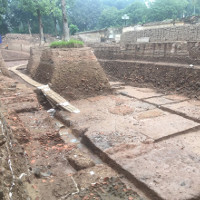
Traces of Early Lê dynasty palace unearthed at Hanoi's Imperial Citadel of Thăng Long
A 2017 dig east of Kính Thiên Palace in Hanoi revealed 4.5m of cultural layers and glazed roof tiles from Early Lê dynasty palaces.

X-rays help scientists save cannonballs from the Mary Rose
Researchers are using powerful X-rays to find a way to preserve cannonballs from the Mary Rose, which corrode when put on display.