Second ancient bronze drum discovered in Quảng Ninh, Vietnam
Recently, while leveling ground and building an embankment, the family of Nguyễn Thị Huệ in Lưỡng Kỳ village, Thống Nhất commune, in the former Hạ Long city of Quảng Ninh province in northeastern Vietnam, discovered a bronze drum buried more than 1 m below the surface.
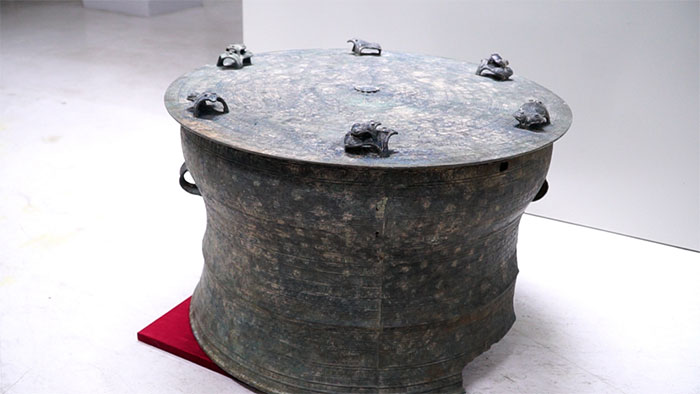
The bronze drum unearthed in Lưỡng Kỳ village, Thống Nhất commune, in the former Hạ Long city, is the second bronze drum found in Quảng Ninh.
The drum was found under the topsoil on the left bank of a stream running through Nguyễn Thị Huệ's garden, about 400 m east of the Núi Mằn (Mằn Mountain) national scenic relic site.
The drum stands 42 cm tall, with a tympanum (top face) 69.5 cm in diameter and a base 66 cm in diameter. When it was unearthed, the drum lay with its tympanum facing up in a layer of dark gray soil, with no other objects around or inside it. The tympanum is still intact and bears six frog figurines: three single frogs and three pairs of mating frogs. The body of the drum is broken, with about two-thirds of it remaining.
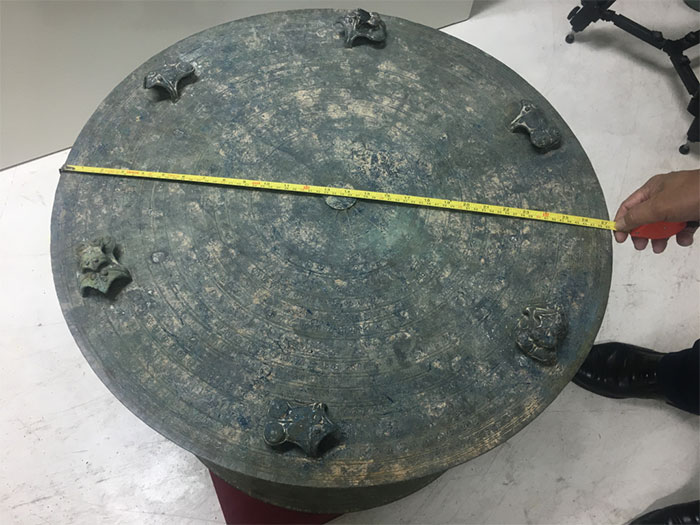
The drum's tympanum remains intact and bears six frog figurines, three of which depict mating frogs.
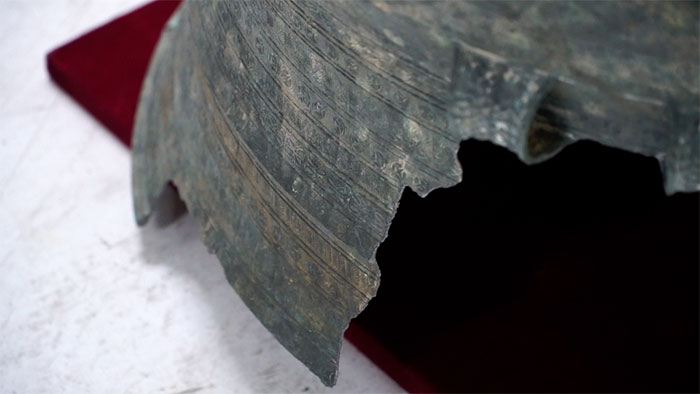
About two-thirds of the drum's body remains.
After the find, Nguyễn Thị Huệ's family reported it to the Thống Nhất commune authorities and the Quảng Ninh Museum. Based on research and consultation with experts, the Quảng Ninh Museum has preliminarily identified the Lưỡng Kỳ drum as a Type II (H2) drum in Heger's bronze drum classification, dating to around the 14th–15th centuries. Drums of this type were typically used in rituals and share many features with the drums of the Mường people in Hòa Bình (now part of Phú Thọ province).
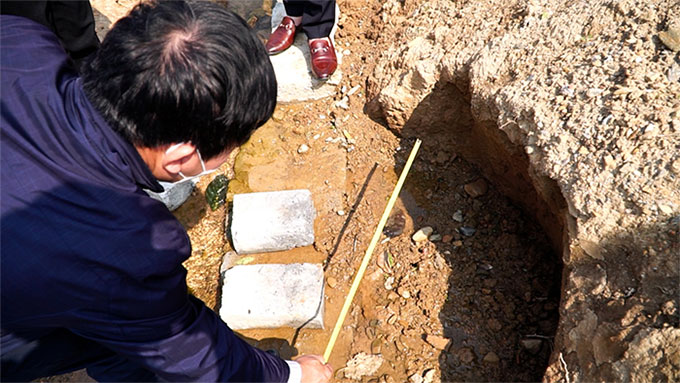
The site where the bronze drum was found, on the left bank of the stream running through Nguyễn Thị Huệ's garden, about 400 m east of the Núi Mằn national scenic relic site.
To date, this is the second bronze drum discovered in Quảng Ninh, after the Quảng Chính bronze drum, found in 1981 in the former Hải Hà district and since recognized as a National Treasure.
The drum is now kept at the Quảng Ninh Museum in accordance with regulations, where it is undergoing preliminary conservation while plans are drawn up to study it, assess its value and promote it in the future.
3 ancient mammal species that appeared after the dinosaurs died out
US scientists have described three new archaic mammal species that appeared soon after the mass extinction that wiped out the dinosaurs.
Bizarre ancient tomb with stone statues nearly 10m tall in Turkey
Mount Nemrut, one of Turkey's most famous archaeological sites, is strewn with toppled colossal statues that lend it an air of mystery.

Australia's largest pterosaur discovered, with a wingspan of up to 7 meters
A fossil over 100 million years old from Queensland reveals a new giant pterosaur species with an estimated wingspan of up to 7 m.
Cave packed with bones hoarded by hyenas for thousands of years, including prehistoric human remains
Researchers believe a huge pile of bones in a Saudi Arabian lava tube was dragged there by striped hyenas over thousands of years.
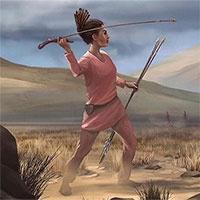
9,000-year-old grave of a young female hunter could rewrite prehistory
A 9,000-year-old grave in Peru holds a woman aged 17-19, buried with the stone tools she carried on her hunts.

Stunning discovery behind secret doors inside Egypt's Great Pyramid
Two secret "doors" inside the Great Pyramid of Giza may conceal a hidden chamber of the pharaoh Khufu, but their true purpose remains a mystery.