Two new assassin bug species discovered in Vietnam
Scientists at the Institute of Ecology and Biological Resources (Viện Sinh thái và Tài nguyên sinh vật) in Hanoi have discovered two assassin bug species new to science, using gene sequencing alongside morphological analysis.
The two new species are Sycanus thuathienhuensis Truong & Ha, found in Thừa Thiên Huế (now Huế city), the former Quảng Nam province (now part of Đà Nẵng city), Gia Lai and Đắk Lắk, and Sycanus taynguyenensis Truong & Ha, found in Đắk Lắk, in Vietnam's Central Highlands. The research, carried out as part of a project funded by the National Foundation for Science and Technology Development (NAFOSTED), was recently published in the journal Zootaxa.
The researchers identified the new species from collected specimens, using comparative morphological analysis and a phylogenetic analysis based on the COI gene sequence.
According to the team, Sycanus thuathienhuensis Truong & Ha has a vermilion body, a dark brown clavus, and a yellowish-brown male pygophore whose central ventral part is dark brown or blackish brown.
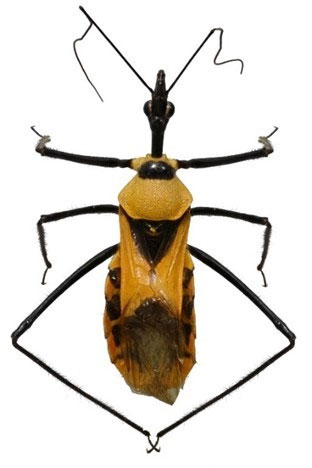
Sycanus thuathienhuensis Truong & Ha. (Photo: Research team).
Sycanus taynguyenensis Truong & Ha has a large, pale orange-brown body; a long, almost black head with a yellowish-brown suffusion on the outer side of the eyes; and a connexivum that is blackish brown at the base, with alternating yellowish-brown and blackish-brown segments.
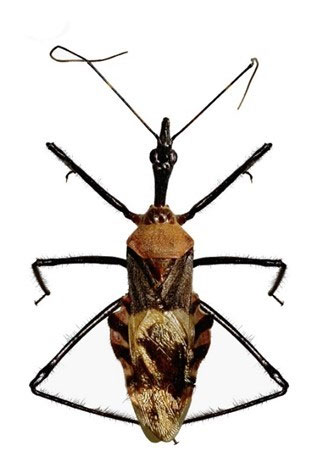
Sycanus taynguyenensis Truong & Ha. (Photo: Research team).
According to the Vietnam Academy of Science and Technology (VAST), the institute's discovery is highly significant for assessing Vietnam's biodiversity potential, and in particular the potential of using assassin bugs to control pests in agriculture and forestry.
The assassin bug genus Sycanus Amyot & Serville, 1843 contains 72 species distributed across Africa and Asia. Of these, eight species, Sycanus atrocoeruleus Signoret, 1862, S. bifidus (Fabricius, 1787), S. croceus Hsiao, 1979, S. falli Stål, 1863, S. minor Hsiao, 1979, S. rubricatus Stål, 1874, S. sichuanensis Hsiao, 1979, and S. ventralis Distant, 1919, have been described and recorded in Vietnam.
Vietnam develops japonica rice with oil-rich bran
Vietnamese scientists have bred a new japonica rice line whose bran contains over 20% oil, suitable for producing cooking oil.
Three rare plant species being conserved and expanded in Vietnam's Pù Luông Nature Reserve
Surveys in Pù Luông Nature Reserve found 130 Garcinia fagraeoides, 25 Cephalotaxus mannii and 120 Camellia pleurocarpa, prompting a conservation plan.
New critically endangered plant genus and species discovered in Vietnam's Quảng Trị limestone mountains
Scientists have described a new endemic plant genus and two critically endangered species from limestone mountains in Quảng Trị, central Vietnam.
Three new plant species and six new records found in caves of northern Vietnam
Scientists have compiled the first checklist of cave plants in northern Vietnam: 337 species from 142 genera and 63 families.
New rock aspidistra species discovered in Phong Điền Nature Reserve, Huế
Aspidistra phongdiensis, a new plant species in the asparagus family, has been found only in the Phong Điền Nature Reserve in central Vietnam.
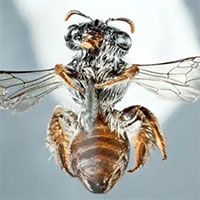
Strange new bee species with a dog-like face discovered in Australia
A new native bee with a snout-like face, Leioproctus zephyr, has been discovered in bushland around Perth, Western Australia.