Rare tree species discovered in the forests of central Vietnam's Quảng Trị
Scientists and local authorities have discovered several valuable tree species in forests more than 1,000m above sea level in Quảng Trị province, central Vietnam, a find that matters for conservation science and local livelihoods.
On September 6, the North Central Forestry Science Center (Trung tâm Khoa học Lâm nghiệp Bắc Trung Bộ) announced that its team had found a stand of long-leaved podocarp, wild ancient tea trees and lệ dương plants while carrying out a forest survey.
Starting on September 2, the center's staff and partner agencies surveyed the forest and measured carbon stocks across roughly 700 hectares of natural community forest in Chênh Vênh village, Hướng Phùng commune, in the former Hướng Hóa district of Quảng Trị province.
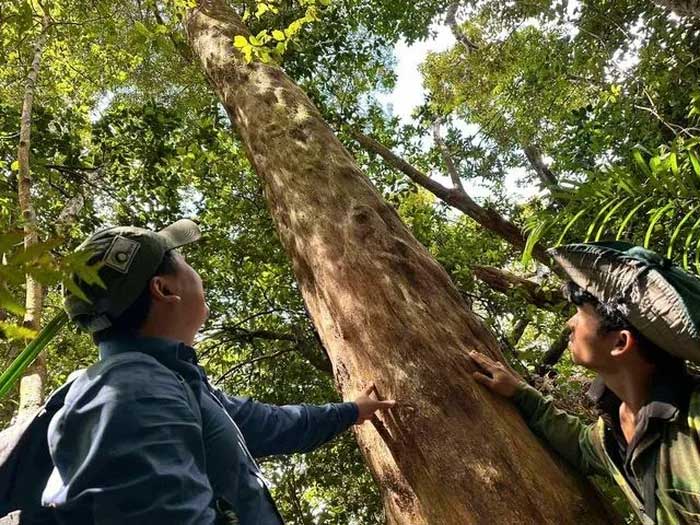
The long-leaved podocarp is a large timber tree that typically grows scattered through closed evergreen forests on both earthen and limestone mountains, and it is listed in the Vietnam Red Data Book.
The team found a stand of long-leaved podocarp covering about 20 hectares, with some trunks up to 90cm in diameter. The long-leaved podocarp belongs to the podocarp family (Podocarpaceae) and has the scientific name Podocarpus neriifolius. It is a large timber tree that typically grows scattered through closed evergreen forests on both earthen and limestone mountains, and it is listed in the Vietnam Red Data Book (2007) and the Red List of Vietnamese Medicinal Plants (2006) as Vulnerable (VU), meaning it requires protection.
According to staff at the North Central Forestry Science Center, the long-leaved podocarp grows extremely slowly, and trees with 90 cm trunks are estimated to be as much as 500 years old. The species occurs in northern Hướng Hóa and the former Đakrông district, but only in scattered, isolated pockets.
In forest above 1,000m, the team also found a population of about 500 wild ancient tea trees spread over around 20 hectares. Local residents said they often go into the forest to pick leaves from these trees for their own use, and estimate the trees to be about 100 years old.
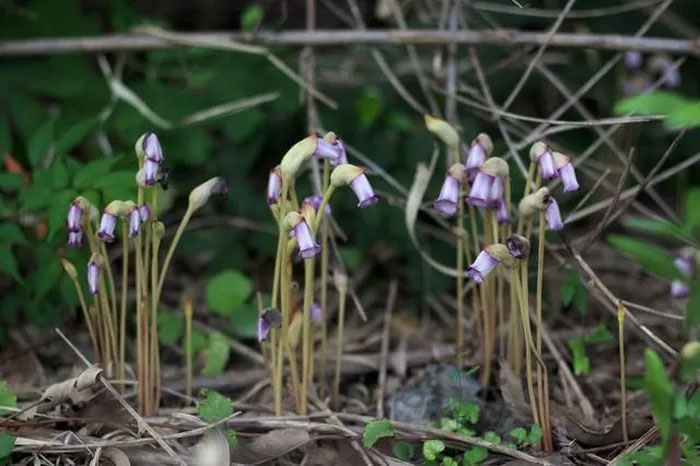
The lệ dương plant is prized not only for its ornamental beauty but is also traditionally regarded as a valuable medicinal herb, though it is not a proven treatment (Photo: internet).
In addition, the team discovered a population of lệ dương plants. The species is prized not only for its ornamental beauty but is also traditionally regarded as a valuable medicinal herb, although it is not a proven treatment. Lệ dương is mainly found in northwestern Vietnam at elevations above 1,000m.
Two new assassin bug species discovered in Vietnam
Vietnamese scientists have described two assassin bug species new to science, Sycanus thuathienhuensis and S. taynguyenensis, using DNA and morphology.
Vietnam develops japonica rice with oil-rich bran
Vietnamese scientists have bred a new japonica rice line whose bran contains over 20% oil, suitable for producing cooking oil.
Three rare plant species being conserved and expanded in Vietnam's Pù Luông Nature Reserve
Surveys in Pù Luông Nature Reserve found 130 Garcinia fagraeoides, 25 Cephalotaxus mannii and 120 Camellia pleurocarpa, prompting a conservation plan.
New critically endangered plant genus and species discovered in Vietnam's Quảng Trị limestone mountains
Scientists have described a new endemic plant genus and two critically endangered species from limestone mountains in Quảng Trị, central Vietnam.
Three new plant species and six new records found in caves of northern Vietnam
Scientists have compiled the first checklist of cave plants in northern Vietnam: 337 species from 142 genera and 63 families.
New rock aspidistra species discovered in Phong Điền Nature Reserve, Huế
Aspidistra phongdiensis, a new plant species in the asparagus family, has been found only in the Phong Điền Nature Reserve in central Vietnam.