Over 1,000 artifacts more than 4,000 years old unearthed in Vietnam's Đắk Nông
On the morning of 26 April, the Department of Culture, Sports and Tourism of Đắk Nông, a former province in Vietnam's Central Highlands that is now part of Lâm Đồng province, and the National Museum of Vietnamese History (Bảo tàng Lịch sử Quốc gia) held a conference to present preliminary results from the excavation of the Thôn 8 (Hamlet 8) archaeological site in Đắk Wil commune, in the former Cư Jút district.
The excavation, which ran from 16 to 26 April, was led by Nguyễn Mạnh Thắng, MA, head of the Research and Collection Department at the National Museum of Vietnamese History.
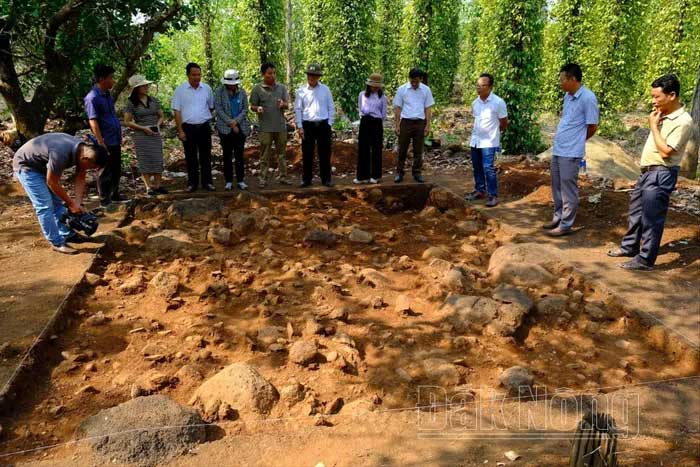
The Thôn 8 archaeological site lies within hamlets 7 and 8 of Đắk Wil commune, in the former Cư Jút district.
The Thôn 8 site, located within hamlets 7 and 8 of Đắk Wil commune in the former Cư Jút district, has been studied and excavated by scientists since 2005. In this latest campaign, the team opened just one excavation pit, on an earth-and-rock mound near Sương Mù Lagoon within hamlets 7 and 8.
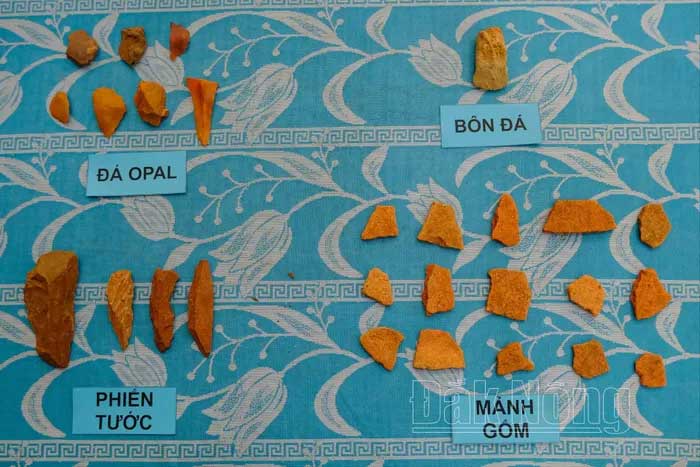
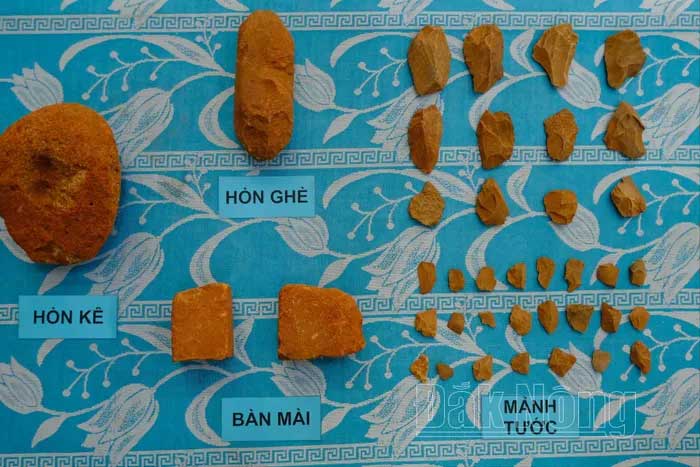
Artifacts found at the Thôn 8 site.
The pit covers 20m² and sits 347m above sea level. Its stratigraphy is 10-30cm deep and is divided into two layers: the surface layer and layer 1. According to a preliminary count, the surface layer yielded 939 stone artifacts of many types, including hammerstones, anvils, grinding slabs, cores and axe roughouts... as well as 150 pottery sherds, with body thicknesses of 0.1-0.5cm.
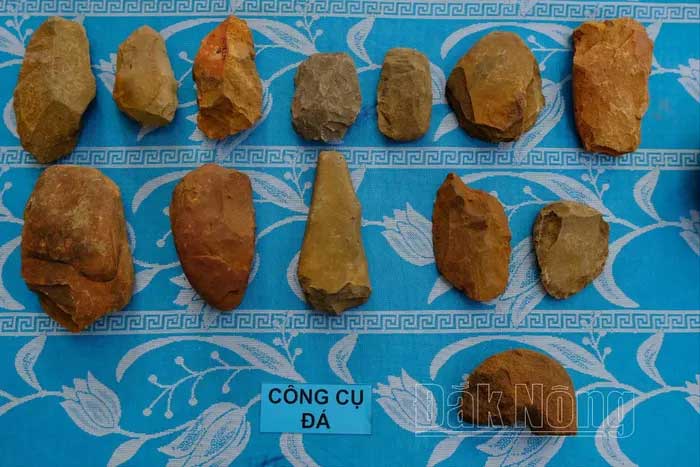
Based on the artifacts found, the researchers estimate that the Thôn 8 site dates to the Late Neolithic, roughly 4,500 years ago, and may even be older than the Late Neolithic.
The excavation has added to the heritage potential and to the historical and cultural research materials of the Đắk Nông UNESCO Global Geopark
In addition to the Thôn 8 site, the researchers surveyed nearby and surrounding areas, such as the Thôn 7 location, Thác Mây (Mây Waterfall) and Đồi Mây (Mây Hill), and found a number of artifacts there.
The excavation has added to the heritage potential and to the historical and cultural research materials of the Đắk Nông UNESCO Global Geopark area, helping to preserve, use and promote the value of archaeological heritage in the socio-economic development strategy of the Đắk Nông UNESCO Global Geopark in particular and of the former Đắk Nông province as a whole.
Prehistoric traces uncovered in archaeological dig in Vietnam's Đắk Nông
Archaeologists in Vietnam's Central Highlands have unearthed quartz artifacts left by prehistoric people thousands of years ago.

Rufous-necked hornbill: One of Vietnam's most endangered birds
Listed as Critically Endangered in the Vietnam Red Data Book, this striking hornbill is hunted for meat and losing its primary forest habitat.
Teeth of prehistoric giant ape discovered in Vietnam's Thanh Hóa province
Scientists have found two teeth of the extinct giant ape Gigantopithecus blacki in a cave in Thanh Hóa, the only such Pleistocene specimens in Vietnam.

Wildfires 13,000 years ago drove saber-toothed cats, dire wolves and other species to extinction
Humans and fire drove out prehistoric animals in California 13,000 years ago, a pattern that echoes what is happening today.
Nearly 200 prehistoric artifacts unearthed in caves in northern Vietnam
Stone tools, bones and pottery up to 10,000 years old were found in caves in the former Bắc Kạn province, now part of Thái Nguyên.
Deer antler found in Vietnam may be a 2,000-year-old musical instrument
A 35-cm antler fragment, likely from a sambar or hog deer, found along the Mekong River may be one of Southeast Asia's oldest stringed instruments.